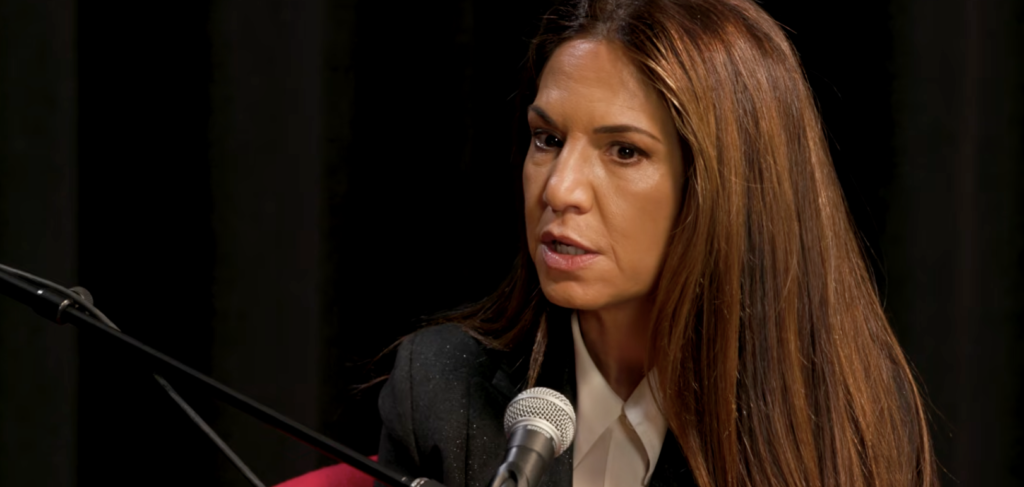
Golnar Khosrowshahi, founder and CEO of Reservoir Media, joined Billboard’s On the Record to discuss where the music catalog market stands in 2026 — and where it’s headed. Here are the five sharpest insights from the conversation.
1. Multiples tell the whole story of the boom
When Reservoir started buying catalogs in 2007, assets traded at just two to four times annual cash flow. Today, the same assets command 15 to 20 times — sometimes more. That shift reflects streaming’s rise from an uncertain experiment to the industry’s dominant revenue engine, turning music IP into a proven, perpetual cash flow asset that institutional investors now eagerly compete for.
“We certainly saw it as an opportunity — but not through some sort of crystal ball.”
2. The key valuation question: how long will people care?
Genre matters in catalog valuation — but not in the way most people assume. The real question buyers ask is how widely a song is listened to, and how long that will last. Classic rock and timeless pop commands premium prices because the music has already proven its staying power across decades. Hip-hop, dance, and even country can fetch strong prices too — but buyers need to believe the music will still resonate in 10, 15, or 20 years.
“Is it ‘Take Me Home, Country Roads’ — that you will keep listening to forever? Or is it a hit in the moment that won’t sustain that cultural impact two decades from now?”
3. Relationships — not auctions — drive the best deals
While the catalog boom brought competitive bidding wars and sky-high auction prices, Reservoir has largely avoided that game. Khosrowshahi says the company executes most of its significant deals off-market, built on long-term relationships with artists, songwriters, lawyers, and managers. That approach — combined with offering ongoing creative services and administration, not just a financial transaction — attracts sellers who care about how their legacy is managed, not just who writes the biggest check.
“We weren’t really transacting through auction processes. Our business is based on relationships.”
4. Sync, biopics, and “flipping” songs all move the needle
A well-placed song in a hit TV show — think Euphoria or Grey’s Anatomy — can reintroduce a catalog to an entirely new generation of listeners. So can a biopic, a fashion collaboration, or a hot new artist sampling an older track. Reservoir knows this firsthand: their ownership of “Ready or Not” (via the Delfonics catalog) has benefited from multiple high-profile interpolations. The challenge, Khosrowshahi notes, is that none of these uplifts can be reliably predicted or baked into a valuation model — they’re upside, not guarantees.
“There is a group of cornerstone songs that are suitable for this and will continue to have this revival.”
5. AI is today’s version of the streaming uncertainty — and the principle is the same
Khosrowshahi draws a direct parallel between the fear around streaming’s rise in the late 2000s and today’s uncertainty around AI-generated music. Her view: the delivery mechanism matters far less than protecting the underlying rights. Whether music is consumed via CD, ringtone, streaming, or some platform that doesn’t yet exist, the business model is fundamentally the same — IP gets licensed and revenue flows from that license. The priority now is ensuring AI-generated music properly compensates the catalogs it trains on.
“The conduit matters less than the rights protection and the importance of maintaining copyright.”
Based on Golnar Khosrowshahi’s appearance on On the Record, Billboard’s music industry podcast.
Leave a Reply