Tag: music business

  • Live Nation’s 2026 Playbook: More Shows, Better Venues, Bigger Fan Spending

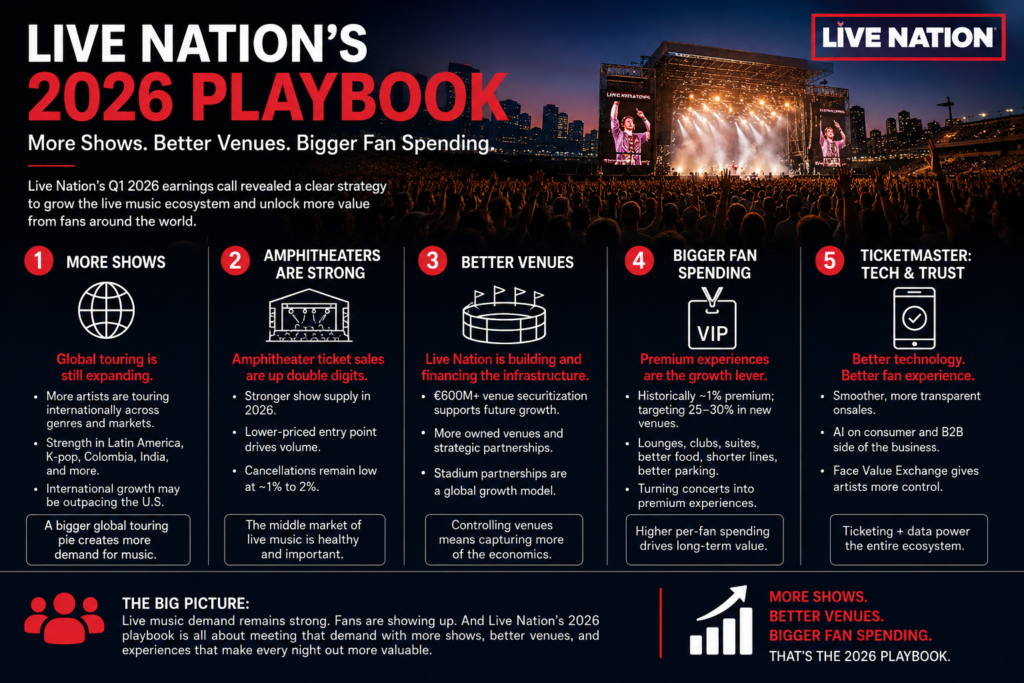
    Live Nation’s first-quarter 2026 earnings call offered a clear look at where the live music business is heading.

    The short version: Live Nation is not just betting on more concerts. It is betting on a bigger live music ecosystem — more global touring, more stadium and amphitheater activity, more owned and partnered venues, better ticketing technology, and higher per-fan spending through premium experiences.

    For the music business, that matters. For catalog owners, labels, artists, investors, and anyone watching the economics of music, Live Nation’s call was a reminder that streaming is only one piece of the puzzle. The real money is often built around the fan relationship.

    Live music is where that relationship becomes visible.
    Live Nation Playbook 2026

    More Shows: The Global Touring Machine Keeps Expanding

    One of the strongest messages from Live Nation management was that global concert supply remains healthy.

    CEO Michael Rapino said more artists are touring globally, and that the live music “pie” continues to grow. He pointed to global supply from regions and genres including Latin America, K-pop, Colombia, India, and other international markets. In his view, more artists from more parts of the world are now able to tour across clubs, theaters, arenas, festivals, and stadiums.

    That is an important point. Live Nation is not framing growth as dependent on one superstar tour or one geography. The company is talking about a broader, more globalized touring market.

    For Catalogs and Cash, this is the key idea: music catalog value becomes more interesting when the audience becomes global.

    An artist’s catalog is not just a static bundle of songs collecting streaming royalties. It can become part of a much larger commercial system. Touring can reintroduce fans to older songs. Festivals can expose legacy acts to younger audiences. International markets can create new demand for music that may have already matured in the U.S. or Europe.

    The more global the fan base becomes, the more ways there are to monetize the music.

    Amphitheaters Are Back in the Story

    Live Nation also spent time addressing amphitheaters, which had been a concern in the prior year. Rapino said the company has stronger amphitheater supply in 2026, and that ticket sales are tracking ahead of last year by double digits. He also pushed back on concerns about cancellations, saying the company typically sees a 1% to 2% cancellation rate and that 2026 does not look unusual.

    That matters because amphitheaters occupy an important middle lane in the concert business.

    Not every artist is a stadium act. Not every catalog is attached to a mega-star. But there is a lot of durable value in artists who can consistently fill amphitheaters, theaters, clubs, and festivals.

    Amphitheaters also have a pricing advantage. Rapino described them as a lower-cost entry point compared with arenas and stadiums. That makes them a volume business. For fans who may not want to spend stadium-level money, amphitheaters offer a more accessible live music experience.

    This is where the long tail of the music business becomes interesting. Legacy rock acts, country artists, jam bands, alternative bands, nostalgia tours, and multi-act summer packages can all fit into this model.

    A catalog does not need to dominate Spotify to have commercial value. Sometimes the better question is: Can this music still move people out of the house?

    If the answer is yes, there may be more value there than the streaming chart suggests.

    Better Venues: Live Nation Wants More Control of the Infrastructure

    The second part of Live Nation’s playbook is venue strategy.

    Live Nation is not just promoting shows. It is building, buying, financing, and partnering around venues. CFO Joe Berchtold discussed a venue securitization transaction of just over €600 million, using certain venues as collateral. He described the company’s venue strategy as having something like a property-company/operating-company structure, while still keeping the assets under one roof.

    That may sound technical, but the business idea is simple: venues are strategic assets.

    If Live Nation controls more of the venue footprint, it can capture more of the economics around the concert. That includes ticketing, sponsorship, food and beverage, premium experiences, parking, hospitality, and long-term fan data.

    This is one of the most important ideas in the modern music business: the money is not only in the music itself. It is in the infrastructure around the music.

    A song gets the fan interested.
    The artist gets the fan emotionally committed.
    The venue turns that attention into a night out.
    The ticketing platform captures the transaction.
    The premium experience increases the spend.
    The sponsor attaches a brand to the moment.

    That is the full stack of live music monetization.

    Stadium Partnerships Could Become a Global Growth Model

    Live Nation also discussed stadium partnerships in Argentina, including arrangements involving Club Atlético and River Plate Stadium. Rapino said the company likes partnering with stadiums globally because many of them are underused compared with NFL-style venues in the U.S.

    That is a very interesting model.

    Instead of always building from scratch, Live Nation can partner with existing stadiums, bring concerts into the building, add sponsorship expertise, and sometimes provide capital. This can be less capital-intensive than owning or building every venue outright, while still allowing Live Nation to lock up important revenue streams.

    For the music industry, this points to a broader trend: live music is becoming more professionalized, more global, and more infrastructure-driven.

    For catalog investors, this matters because a stronger live infrastructure can extend the life of music assets. If older artists, reunion tours, tribute events, anniversary shows, and festival appearances become easier to route and monetize globally, then catalogs tied to those artists may have more ways to stay culturally and commercially relevant.

    Bigger Fan Spending: Premium Is the Growth Lever

    The most interesting part of the call may have been Live Nation’s comments on premium fan experiences.

    Rapino said concerts have historically been roughly 99% general admission or standard experience and only 1% premium. But Live Nation sees an opportunity to change that. He said some new arenas could have up to 30% of the house in a premium capacity, while amphitheaters could move from low-single-digit premium levels toward 25% premium.

    That is a major shift.

    Live Nation wants concerts to look more like sports venues. That means better parking, shorter lines, better food and beverage, hospitality rooms, suites, boxes, lounges, and upgraded experiences.

    This makes sense. Fans are not only paying for music. They are paying for the night.

    The seat matters.
    The parking matters.
    The line matters.
    The drink matters.
    The bathroom matters.
    The ability to avoid chaos matters.

    For younger fans, the concert may be a social-media-worthy experience. For older fans, comfort may be the reason they are willing to attend at all. A 50-year-old fan who loves a legacy artist may not want to fight lawn traffic, wait in long lines, or stand all night. But that same fan may pay more for a better experience.

    That creates a huge opportunity around legacy catalogs.

    Older catalogs often have older fans. Older fans often have more disposable income. If Live Nation can improve the premium experience, it can increase per-fan spending without needing every fan to be a teenager streaming songs all day.

    That is a very different way to think about catalog value.

    Ticketmaster Is Still Central to the Strategy

    Ticketmaster also came up repeatedly on the call.

    Rapino said the company is focused on making the onsale process smoother, more transparent, and more confidence-building for fans. He also mentioned using AI on both the consumer side and the B2B side, while building out tools like Face Value Exchange for artists.

    Berchtold added that Ticketmaster is using newer approaches, including AI tools, to move faster in markets like Latin America, Asia, and Japan.

    The strategic point is clear: ticketing is not just a transaction layer. It is part of the fan relationship.

    Who controls the ticketing experience controls a valuable part of the music economy. That company sees demand, pricing, geography, artist strength, fan behavior, and purchase intent.

    For artists and catalog owners, this matters because fan data is becoming one of the most important assets in music. A catalog tells you what people listen to. Ticketing tells you what people will leave the house and pay for.

    Those are not the same thing.

    No Demand Pullback — At Least Not Yet

    Live Nation also addressed the big investor question: are consumers pulling back?

    Rapino said the company is not seeing a demand slowdown across genres, demographics, geographies, venue types, or price points. He pointed to everything from club shows to amphitheaters to expensive stadium shows and said demand remains strong.

    That is a powerful statement, especially in an economy where people keep looking for signs of consumer weakness.

    Live music appears to remain a priority. Fans may cut back elsewhere, but the concert is still a major social event. For some fans, it may be one of the few big nights out they plan around all year.

    That supports a broader thesis: music remains emotionally durable.

    People may change how they consume it. They may shift from CDs to downloads to streaming to short-form video. But the desire to gather around music has not disappeared.

    In some ways, it may be stronger because so much of modern life is digital. The live show is physical, social, scarce, and memorable.

    That is why it commands pricing power.

    The Catalogs and Cash Takeaway

    Live Nation’s 2026 playbook is simple:

    More shows.
    Better venues.
    Bigger fan spending.

    But underneath that is a bigger music business lesson.

    The value of music is not limited to streaming royalties. Music creates identity, memory, community, and live demand. The companies that can turn that demand into experiences, venues, sponsorships, ticketing, hospitality, and global touring routes are building around the music in ways that can be extremely valuable.

    For catalog investors, this should matter.

    A catalog is not just a spreadsheet of historical royalties. It is a living asset connected to fan behavior. If the artist can tour, if the music can support a festival slot, if the fan base has spending power, if the songs still create emotional pull, then the catalog may have value beyond passive streaming income.

    Live Nation’s call showed that the live music economy still has momentum. The company is investing in venues, expanding globally, improving ticketing, and trying to increase per-fan monetization through premium experiences.

    That is not just a concert story.

    That is a music asset story.

    Bottom Line

    Live Nation’s Q1 2026 call was a reminder that the music business is bigger than the stream count.

    Streaming tells us what people play.
    Concerts tell us what people will pay for.
    Venues show where the money gets captured.
    Premium experiences show how much more the night can be worth.

    And that is the real Catalogs and Cash lesson: the future of music value may belong to the companies that understand not only the song, but the entire economy around the fan.
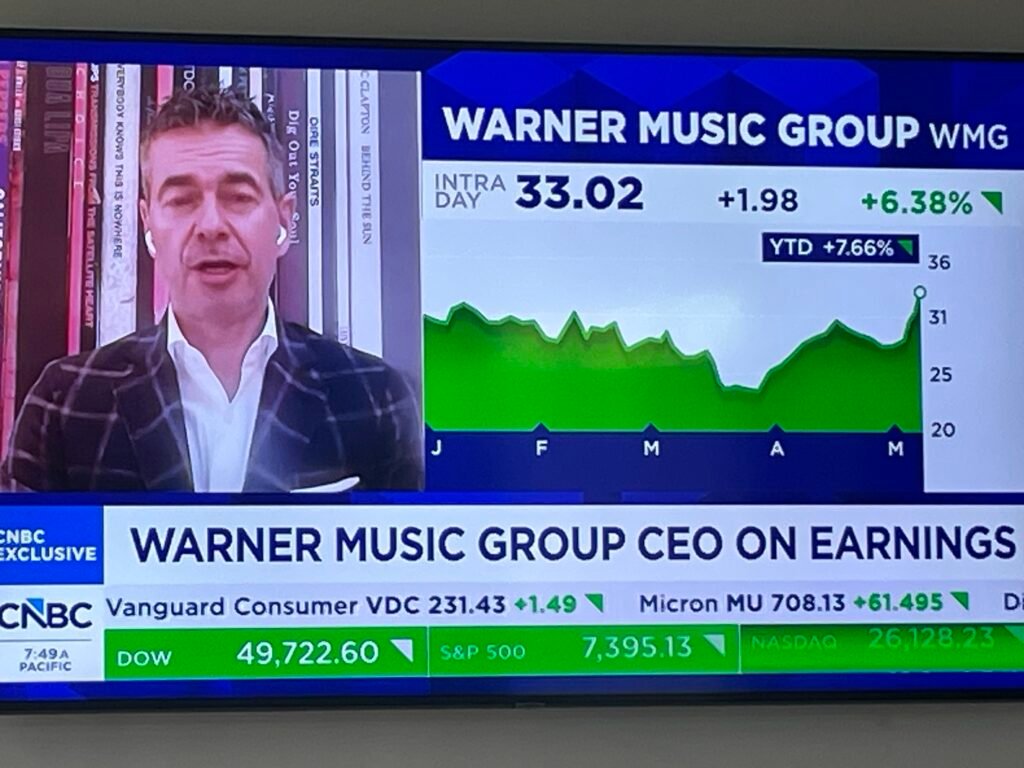
  • What Robert Kyncl Said About AI During Warner Music Group’s Earnings Call

    What Robert Kyncl Said About AI During Warner Music Group’s Earnings Call

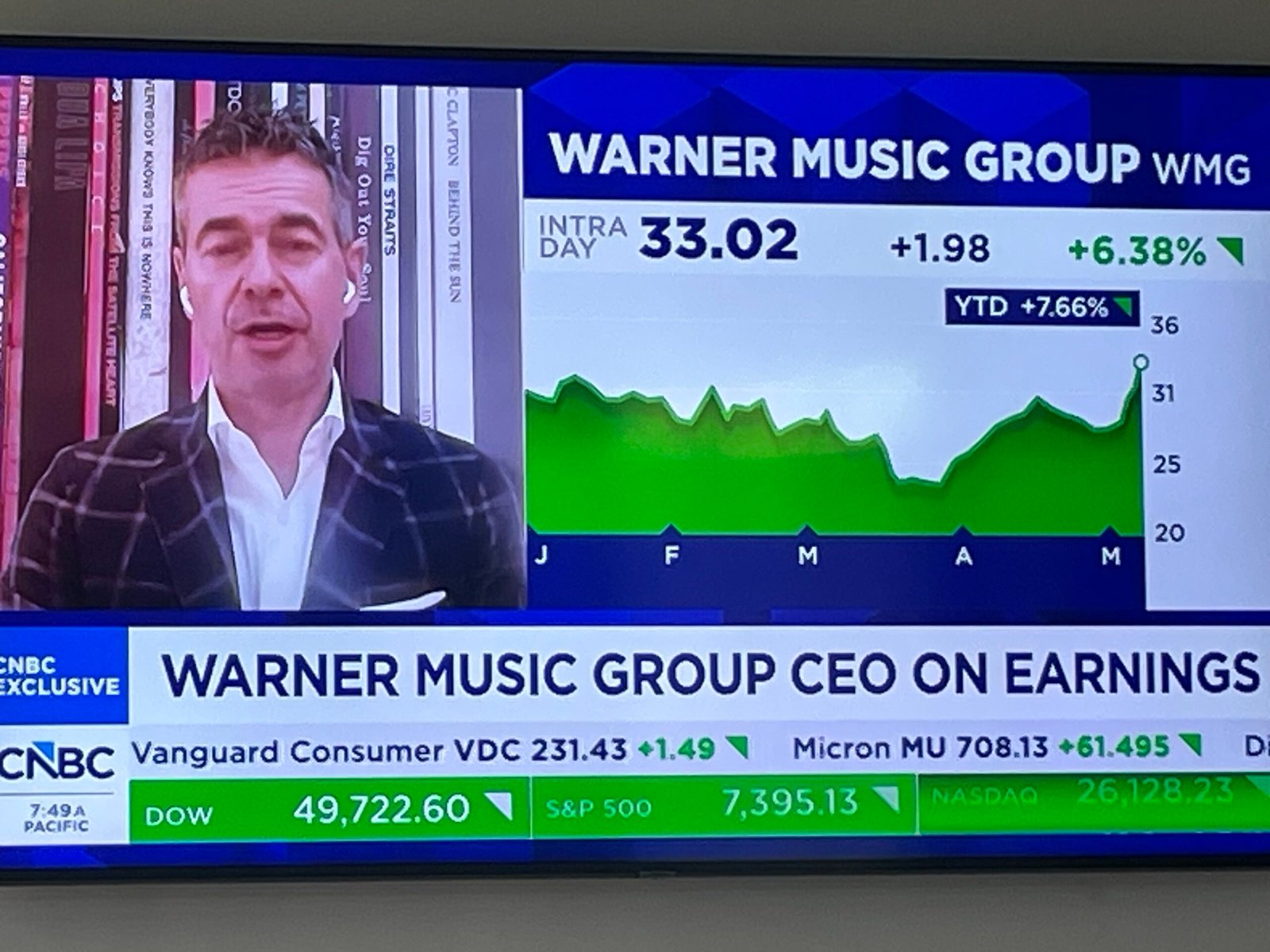
    Artificial intelligence was one of the dominant themes during Warner Music Group’s latest earnings call, and CEO Robert Kyncl made it clear the company sees AI as a major growth opportunity — not just a threat.

    Rather than framing AI as something the music industry must simply defend against, Kyncl repeatedly described AI as a tool that can expand engagement, improve efficiency, create new revenue streams, and increase the value of music catalogs.

    Here are the biggest takeaways from his comments.

    Robert Kyncl

    Warner Says AI Is Already Improving Catalog Monetization

    One of the most revealing parts of the call was Kyncl explaining how Warner is already using AI operationally.

    He said Warner has developed AI tools that help the company create:

    • motion art
    • visualizers
    • lyric videos
    • marketing assets

    …quickly and cost-effectively across its enormous music catalog.

    That matters because Warner’s catalog includes more than:

    • 1 million tracks
    • 70,000 artists

    Historically, labels could only economically market a small percentage of their catalog at scale. AI changes those economics dramatically.

    Kyncl explained that Warner is also using proprietary AI models to help determine where marketing resources should be focused, allowing the company to deepen monetization of older music.

    In practical terms, AI may allow labels to continuously revive and repackage older songs for new audiences at a much lower cost than before.


    Warner Believes AI Can Increase the Value of Music

    Kyncl repeatedly emphasized that Warner’s strategy is focused on “increasing the value of music.”

    One of the ways the company plans to do that is through:

    • AI partnerships
    • premium streaming tiers
    • interactive fan experiences

    Warner specifically discussed working with streaming platforms and emerging AI companies on:

    • AI-powered subscription tiers
    • enhanced fan engagement
    • higher-priced offerings

    The broader implication is that streaming could evolve beyond passive listening into something more interactive.

    That could eventually include:

    • remix functionality
    • fan participation tools
    • AI-assisted music creation
    • personalized listening experiences

    The company appears to believe consumers will pay more for deeper engagement with music.


    Warner’s Partnership With Suno Was A Major Focus

    Kyncl highlighted Warner’s licensing relationship with Suno as an example of the company’s AI strategy in action.

    Rather than attempting to completely shut down AI music platforms, Warner appears to be pursuing a more pragmatic approach:

    • licensing
    • monetization
    • copyright protection
    • participation in future growth

    Warner said Suno currently has:

    • roughly 2 million subscribers
    • an average monthly spend of approximately $12.50

    The company also noted that Suno is reportedly generating around $300 million in annualized revenue.

    Those figures suggest there is already meaningful consumer demand for AI-powered music experiences.


    Warner Says AI Music Has Had “Minimal Dilutive Impact”

    One of the more interesting comments from Kyncl involved concerns that AI-generated music could flood streaming services and reduce the value of professionally created music.

    According to Warner, major DSPs have reported that most AI-generated uploads are currently seeing:

    • very limited engagement
    • minimal impact on overall streaming economics

    Kyncl also emphasized that Warner is working closely with DSP partners to ensure contractual protections exist to prevent dilution and protect artists and songwriters.

    That signals the major labels are attempting to shape the rules of AI music early rather than reacting later.


    AI Is Becoming Part of Warner’s Financial Model

    Perhaps the most important takeaway from the earnings call is that Warner no longer talks about AI as an experiment.

    Executives explicitly stated they expect AI initiatives to become:

    “a material contributor to top and bottom line growth starting in fiscal 2027.”

    That is a major shift.

    It suggests Warner believes AI will eventually contribute to:

    • revenue growth
    • margin expansion
    • operational efficiency
    • streaming monetization
    • catalog engagement

    In other words, AI is now entering the company’s long-term business model.


    The Bigger Picture

    The earnings call revealed something important about the future direction of the music industry.

    Warner Music Group increasingly views itself not simply as a traditional record label, but as:

    • a global intellectual property platform
    • a data-driven media company
    • an AI-enabled infrastructure business

    Rather than seeing AI solely as a threat, Warner appears determined to:

    • license it
    • monetize it
    • integrate it
    • control the commercial framework around it

    That could fundamentally reshape how music is created, distributed, monetized, and experienced over the next decade.

  • 5 Takeaways From Warner Music’s May 2026 Earnings Call

    1. AI Is Already Changing the Music Business

    Warner openly said AI will become a “material contributor” to revenue and profits starting in fiscal 2027. This is no longer theoretical. The company is already using AI for catalog marketing, lyric videos, visualizers, forecasting, reporting, and automation.

    2. Catalog Music Is the Economic Engine

    Warner said catalog music now represents roughly 65% of recorded music streaming revenue. Older music is becoming more valuable in the streaming era because catalogs can generate recurring revenue for decades.

    3. The Labels Want to Monetize AI, Not Just Fight It

    Rather than simply resisting AI platforms, Warner is pursuing licensing deals and partnerships. Its relationship with Suno shows the company believes AI music and interactive fan experiences could become major future revenue streams.

    4. Modern Record Labels Are Starting to Look Like Tech Companies

    The earnings call sounded more like a technology company presentation than a traditional music business update. Warner repeatedly discussed:

    • automation
    • standardized data systems
    • operating leverage
    • AI-driven forecasting
    • centralized intelligence

    The modern label is evolving into an AI-enabled intellectual property platform.

    5. Streaming Is Becoming a Higher-Margin Subscription Business

    Subscription streaming revenue grew 15%, helped by pricing increases across DSPs. The industry is moving beyond pure user growth and toward higher pricing, premium tiers, and stronger monetization of superfans and interactive experiences.

  • 5 Takeaways from Warner Music Group CEO Robert Kyncl’s CNBC Interview 🎵📈

    Warner Music Group delivered a strong quarter, but the bigger story from CEO Robert Kyncl’s CNBC interview may be where the music industry is headed next: AI, interactivity, pricing power, and platform economics.

    Robert Kyncl CNBC Interview

    Here are 5 major takeaways:

    1️⃣ Warner Music is operating more like a tech company
    Kyncl repeatedly emphasized automation, efficiency, organizational streamlining, and disciplined capital allocation.

    The message to investors was clear:
    Warner believes it can improve margins while simultaneously investing aggressively in artists, A&R, and distribution.

    That’s a very different narrative from the traditional “record labels are bloated” perception. The company is positioning itself as a scalable, technology-enabled media business.

    2️⃣ Pricing power is becoming a major growth driver
    Streaming growth is no longer just about adding subscribers.

    Warner discussed:
    • subscription price increases
    • per-subscriber minimums
    • stronger economics with streaming partners
    • higher monetization per user

    Kyncl even compared music streaming economics to cable TV carriage fees.

    Translation:
    The labels believe music is becoming valuable enough to command higher recurring revenue from platforms like Spotify and others.

    3️⃣ Warner is leaning INTO AI — not running from it

    One of the most interesting parts of the interview was Warner’s approach to AI.

    Instead of framing AI solely as a threat, Kyncl framed it as:
    “a new revenue opportunity.”

    The company’s partnership with Suno signals that Warner wants to help shape the licensing and monetization framework for AI-generated music rather than simply resist it.

    That could become extremely important over the next 3–5 years.

    4️⃣ “Interactive music” could become the next big business model


    Kyncl repeatedly used the word: “interactivity.”

    That matters.

    The company appears to believe the future of music may involve:
    • AI remixing
    • personalized music experiences
    • interactive fan engagement
    • customizable tracks
    • premium AI-powered streaming tiers

    The comparison to gaming was notable because gaming historically generates far higher revenue per user than passive media.

    Warner seems to believe AI could transform music from something people simply consume into something they actively participate in.

    5️⃣ Major music catalogs may become EVEN more valuable in the AI era


    As AI-generated music explodes, the value of trusted brands, superstar artists, iconic catalogs, and licensed intellectual property may increase.

    Why?

    Because abundance creates noise.

    When anyone can generate music instantly, discovery, trust, identity, and recognizable catalogs become even more important.

    That may strengthen the position of major labels that control massive libraries of culturally relevant music.

    Big picture:
    This interview sounded less like a traditional entertainment executive and more like a technology platform CEO discussing monetization, interactivity, scalability, and recurring revenue.

    The music industry is changing quickly — and Warner Music clearly wants to be one of the companies shaping the next phase of it.

  • The Michael Jackson Estate’s Biggest Opportunity: Repositioning the 1990s Catalog

    Introduction: A Catalog Imbalance Hiding in Plain Sight

    The catalog of Michael Jackson is one of the most valuable in music history. However, it is also uneven.

    On one hand, his 1980s output—Thriller, Bad, Off the Wall—continues to dominate streaming platforms, SiriusXM rotation, and cultural memory. Meanwhile, his 1990s catalog remains underplayed, under-discussed, and under-monetized.

    Importantly, this is not a quality issue. Rather, it is a positioning problem.


    The 1990s Were Bigger Than We Remember

    Dangerous (1991): A Commercial Powerhouse

    The album Dangerous was a commercial powerhouse. It produced major global hits such as “Black or White,” “Remember the Time,” “In the Closet,” and “Jam.”

    At the time, these songs defined pop music on a global scale. Today, however, they are not programmed with the same consistency as his 80s catalog.

    As a result, a generation of listeners associates Michael Jackson primarily with his earlier work, even though the 90s output was substantial.


    HIStory (1995): The Narrative Shift

    HIStory: Past, Present and Future, Book I marked a tonal and thematic pivot.

    Key tracks include:

    • “They Don’t Care About Us”
    • “Scream” (with Janet Jackson)
    • “Stranger in Moscow”
    • “Earth Song”
    • “You Are Not Alone”

    These songs were:

    • More political
    • More introspective
    • More cinematic

    And that shift changed how they age—and how they’re consumed today.


    Why the 90s Catalog Underperforms Today

    1. It Doesn’t Fit Easy Listening Lanes

    The 80s catalog is frictionless:

    • Instant recognition
    • Works in party settings
    • Fits “classic hits” formats

    The 90s catalog is different:

    • Slower
    • Heavier
    • More thematic

    Songs like:

    • “Earth Song”
    • “Stranger in Moscow”

    Don’t slot easily into algorithm-driven playlists or radio formats.


    2. The Narrative Became Complicated

    By the mid-1990s, the story around Michael Jackson changed.

    Music was no longer the only lens:

    • Tabloid coverage intensified
    • Public perception shifted
    • Personal controversy became part of the narrative

    That context affects how songs are remembered and programmed.

    Even a #1 hit like “You Are Not Alone” doesn’t receive consistent rotation today.


    3. There’s a “Story Gap” in the Catalog

    The arc is clear:

    • 70s: emergence
    • 80s: peak dominance
    • 90s: unclear positioning

    Without a defined narrative, the 90s catalog becomes fragmented—and easier to overlook.


    The Reframe: The Cinematic, Global, and Burden of Fame Era

    The 1990s catalog shouldn’t be treated as “post-peak.”

    It should be positioned as:

    Michael Jackson’s cinematic, global era—where the music reflects the weight and consequences of unprecedented fame.

    This reframing connects the work:

    • “Scream” → backlash
    • “They Don’t Care About Us” → defiance
    • “Stranger in Moscow” → isolation
    • “Earth Song” → global consciousness

    Now it’s not a scattered era.

    It’s a cohesive narrative.


    How the Estate Can Unlock Value

    1. Use Film as a Catalyst

    A sequel to Michael presents the strongest opportunity.

    Film doesn’t just revisit music—it reframes it.

    If the 90s are presented as a turning point:

    • Streaming spikes follow
    • Cultural re-evaluation begins
    • Under

    The 1990s Were Bigger Than We Remember

    Dangerous (1991): A Commercial Powerhouse

    The album Dangerous produced major global hits:

    • “Black or White”
    • “Remember the Time”
    • “In the Closet”
    • “Jam”

    These were not minor successes—they were defining records of the era.

    Yet today, they are not programmed or remembered with the same consistency as his 80s work.

    HIStory (1995): The Narrative Shift

    By contrast, HIStory: Past, Present and Future, Book I marked a tonal shift.

    It introduced songs like:

    • “They Don’t Care About Us”
    • “Scream” (with Janet Jackson)
    • “Stranger in Moscow”
    • “Earth Song”

    Notably, these tracks were more political, more introspective, and more cinematic. Because of this, they do not fit neatly into traditional radio formats or algorithm-driven playlists.

    Why the 90s Catalog Underperforms Today

    The 80s catalog is frictionless. For example, it works in party settings, gyms, and “classic hits” formats.

    In contrast, the 90s catalog is slower and more thematic. Therefore, songs like “Earth Song” and “Stranger in Moscow” struggle to find a consistent home in modern programming.

    2. The Narrative Became Complicated

    At the same time, the broader narrative around Michael Jackson changed in the 1990s.

    Music was no longer the only lens. Instead, media coverage and personal controversy began to shape public perception.

    Consequently, even major hits like “You Are Not Alone” do not receive consistent rotation today.

    3. There’s a “Story Gap” in the Catalog

    The arc is clear:

    • 70s: emergence
    • 80s: peak dominance
    • 90s: unclear positioning

    Without a defined narrative, the 90s catalog becomes fragmented—and easier to overlook.

    A Quick Data Check: The Rotation Gap Is Real

    To validate the narrative, it helps to look at real-world airplay.

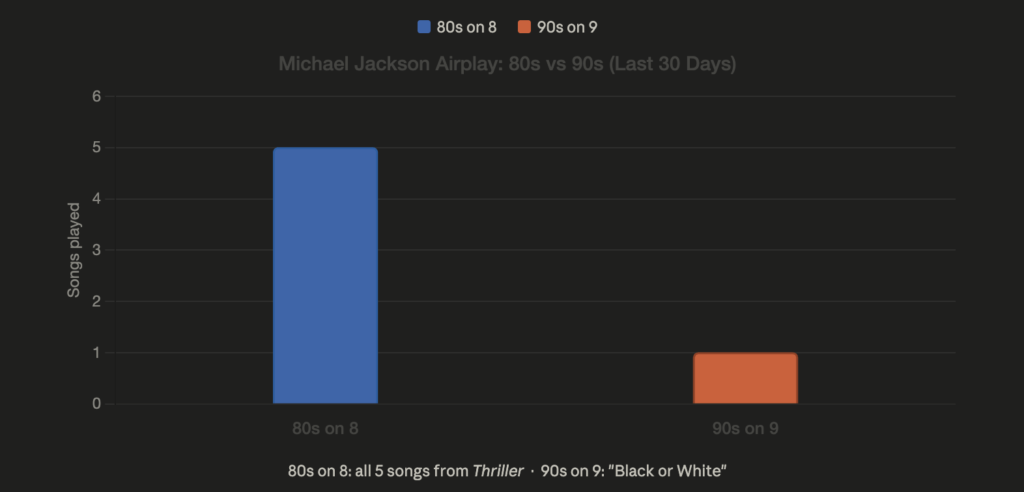
    Over the last 30 days (April 4 – May 4), the gap is clear.

    On 80s on 8, Michael Jackson has five songs among the most-played tracks. Notably, all five come from Thriller.

    In other words, his 1980s presence is not just strong—it is concentrated around a single, dominant tentpole.

    By contrast, the 1990s tell a very different story.

    On 90s on 9, Jackson has just one song in the most-played rotation: “Black or White” from Dangerous.

    Even more interesting, that track ranks #6 overall—and stands as one of the most-played songs from 1991 on the channel.

    However, despite that strong individual performance, the broader 1990s catalog remains largely absent from rotation.

    At the same time, 90s on 9 tends to skew toward the late 1990s, which may further limit exposure for earlier-decade Jackson releases. Still, that alone doesn’t explain the gap.

    Ultimately, the data reinforces the core point:

    The issue isn’t that the 1990s catalog lacks hits—it’s that only one of them consistently breaks through modern programming filters.


    Why This Matters

    Taken together, this creates a clear imbalance:

    • The 1980s catalog is deep, visible, and repeatedly surfaced
    • The 1990s catalog is shallow in rotation, despite proven success

    As a result, listener perception follows exposure—not history.

    And right now, the exposure is telling a very incomplete story.


    The Reframe: The Cinematic, Global, and Burden of Fame Era

    The 1990s catalog shouldn’t be treated as “post-peak.”

    It should be positioned as:

    Michael Jackson’s cinematic, global era—where the music reflects the weight and consequences of unprecedented fame.

    This reframing connects the work:

    • “Scream” → backlash
    • “They Don’t Care About Us” → defiance
    • “Stranger in Moscow” → isolation
    • “Earth Song” → global consciousness

    Now it’s not a scattered era.

    It’s a cohesive narrative.

    How the Estate Can Unlock Value

    1. Use Film as a Catalyst

    A sequel to Michael presents the strongest opportunity.

    Film doesn’t just revisit music—it reframes it.

    If the 90s are presented as a turning point:

    • Streaming spikes follow
    • Cultural re-evaluation begins
    • Underplayed songs gain context

    2. Create New Programming Lanes

    The solution is not forcing 90s songs into old categories.

    It’s building new ones:

    • Cinematic pop
    • Global anthems
    • Fame and pressure narratives

    Right now, these songs are effectively “homeless” in modern programming.

    3. Lean Into Depth, Not Nostalgia

    The 80s catalog thrives on nostalgia.

    The 90s catalog thrives on meaning.

    That distinction matters.

    Songs like:

    • “Earth Song”
    • “Stranger in Moscow”

    Are not background music.

    They are emotional, thematic pieces that require a different listening context.

    The Business Case: A Mispriced Asset

    Catalog value is driven by:

    • Frequency of play
    • Cultural relevance
    • Licensing demand

    Today:

    • 80s MJ = high-frequency assets
    • 90s MJ = low-frequency assets

    That gap is not about quality.

    It’s about positioning.

    The 1990s catalog is a mispriced asset that requires narrative activation to unlock its full value.

    Conclusion

    The music is already there. The hits already exist.

    What’s missing, however, is the story.

    Until the 1990s era is reframed as a distinct and essential chapter—defined by scale, pressure, and global ambition—it will remain underutilized.

    Ultimately, this represents one of the clearest opportunities in modern catalog management.

  • Why Artists Should Treat Their Music Catalog Like a Family Business

    There’s a quiet shift happening in the music industry — and most artists are missing it.

    For decades, the dream was simple: write great songs, get famous, and eventually cash out. Sell the catalog, take the money, and move on.

    But that model is starting to look short-sighted.

    Because a music catalog isn’t just a collection of songs.

    It’s a cash-flowing asset. A brand. A long-term business.

    And the artists who understand that are starting to think very differently.


    🎸 The Old Model: Build, Peak, Sell

    Historically, artists treated their catalog like a final paycheck.

    You build value over time:

    • Release albums
    • Generate hits
    • Accumulate royalties

    Then one day, you sell:

    • Private equity firm
    • Music publisher
    • Label-backed fund

    We’ve seen this play out again and again:

    • Bob Dylan sells publishing
    • Bruce Springsteen sells masters
    • Stevie Nicks sells catalog stake

    From a financial perspective, it makes sense:

    • Immediate liquidity
    • Risk transfer
    • Estate simplicity

    But here’s the problem:

    You’re selling the one asset that can pay you — and your family — forever.


    💰 The New Reality: Catalogs Are Perpetual Cash Machines

    Streaming changed everything.

    In the past, revenue was front-loaded:

    • Album sales
    • Radio play
    • Touring cycles

    Now, catalogs generate ongoing, compounding income:

    • Spotify / Apple Music streams
    • YouTube monetization
    • Sync licensing (film, TV, ads)
    • Algorithmic discovery

    A song released 30 years ago can still produce meaningful revenue today — sometimes more than when it was released.

    That’s why albums like:

    • Legend
    • Greatest Hits

    continue to generate millions annually.

    These aren’t just albums anymore.

    They’re income-producing portfolios.


    🧠 The Mental Shift: From Artist to Asset Owner

    This is where things get interesting.

    The artists who win long-term don’t just think like creators — they think like owners.

    Instead of asking:

    “How much can I sell this for?”

    They ask:

    “How much can this generate over 30–50 years?”

    That’s a completely different mindset.

    It’s closer to:

    • Real estate investing
    • Dividend stocks
    • Private equity hold strategies

    And it leads to a different conclusion:

    Selling your catalog might be the least optimal move.


    🏛️ The Family Business Model

    Think about a music catalog like a family-owned company.

    You wouldn’t sell a profitable business that:

    • Requires minimal overhead
    • Generates recurring revenue
    • Appreciates over time

    You’d:

    • Protect it
    • Grow it
    • Pass it down

    Music catalogs work the same way.

    A well-managed catalog can:

    • Fund education for future generations
    • Provide consistent income
    • Increase in value as platforms expand

    A hit song isn’t just a moment. It’s an annuity.


    ⚖️ Why Some Artists Still Sell

    To be fair, selling isn’t always wrong.

    There are legitimate reasons:

    • Estate planning complexity
    • Tax optimization
    • Lack of management infrastructure
    • Desire for immediate liquidity

    But increasingly, those decisions are being made under pressure from:

    • Private equity firms
    • Catalog aggregators
    • Institutional buyers

    And those buyers are betting on one thing:

    That the catalog is worth more in the future than what they’re paying today.


    🎯 The Strategic Alternative: Partner, Don’t Sell

    Instead of selling outright, artists have more options than ever:

    • Partial sales (retain control)
    • Joint ventures (share upside)
    • Administration deals (outsource management)
    • Licensing optimization (increase revenue without selling)

    This is where the smartest artists are going.

    They’re treating their catalog like:

    A business to operate — not an asset to exit.


    🔥 The Hidden Opportunity

    Here’s the bigger picture — and it’s where things get really interesting.

    Most artists are:

    • Undermanaging their catalog
    • Undermonetizing their rights
    • Ignoring long-tail value

    Which means there’s a massive opportunity for:

    • Consultants
    • Analysts
    • Operators

    To step in and treat catalogs like:

    • Data assets
    • Financial instruments
    • Strategic businesses

    🟡 Final Thought

    For years, the industry taught artists to chase hits.

    But the real game isn’t hits.

    It’s ownership.

    A catalog isn’t a payday. It’s a dynasty.

    And the artists who understand that will build something far more valuable than a moment of success.

    They’ll build something that lasts.

  • How Music Catalogs Are Really Valued

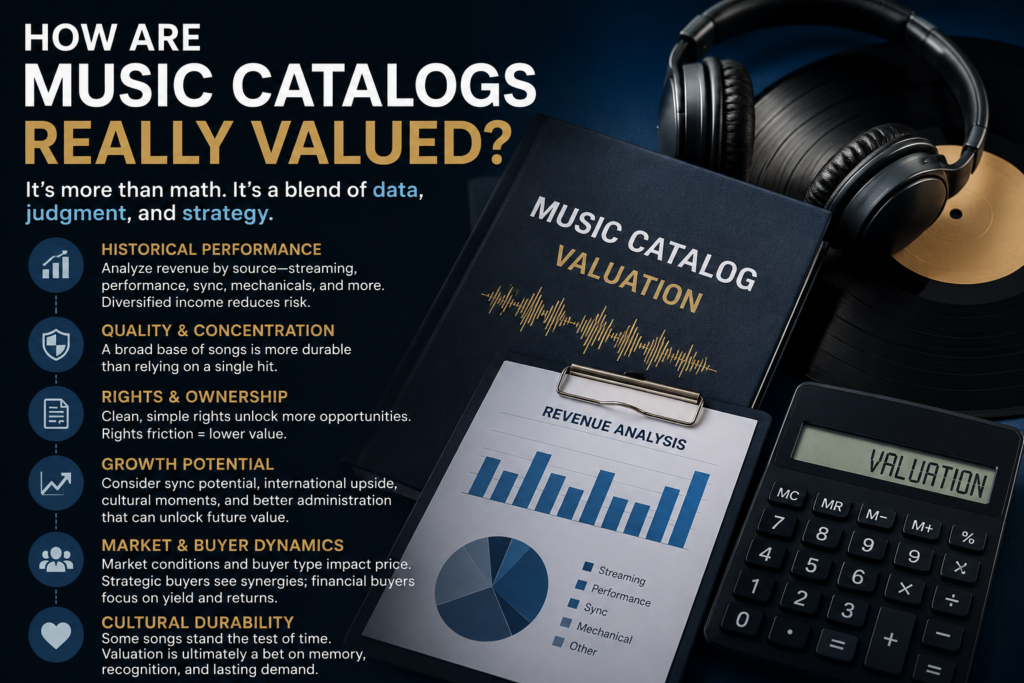
    Music catalog valuation looks simple from the outside. A buyer studies the royalty statements, decides what the songs have earned, puts a multiple on that income, and arrives at a price. In reality, it is far messier. A catalog is not a factory with fixed outputs. It is a living asset shaped by consumer taste, licensing activity, artist reputation, platform shifts, and how actively the rights are managed. That is why the best way to understand valuation is to think of it as a blend of math, judgment, and strategy.

    The first layer is historical performance. Buyers want to know what the catalog has actually done, not what someone hopes it might do. That means looking closely at the last several years of revenue by source. Streaming is usually the headline number because it is visible, recurring, and easy to model. But streaming is only one part of the picture. Performance income, mechanicals, sync licensing, neighboring rights, and other revenue streams can all matter. A catalog with diversified income is often more attractive than one that depends almost entirely on a single source. Diversification lowers risk and gives the buyer more confidence that a sudden change in one channel will not break the investment thesis.

    The second layer is quality of income. Not every dollar is equally valuable. If a catalog’s earnings come from a broad base of songs that continue to show up year after year, that is different from a catalog where one song carries everything. Concentration risk matters. A catalog built on one monster track can still be valuable, but the valuation process has to account for the possibility that interest in that one song fades. A deeper catalog with multiple recognizable works may look less flashy on paper but can be more durable over time.

    Then there is the question of rights. Are you buying publishing, masters, or both? Do the songs have straightforward ownership, or are there samples, multiple writers, conflicting approvals, and legacy complications? Rights friction can reduce value because it slows down monetization. A film and television supervisor wants a clean path. If every placement turns into a multi-party negotiation, some opportunities disappear before they begin. In other words, two songs with similar streaming profiles can have different valuations because one is easier to exploit commercially.

    Another major input is growth potential. Buyers do not pay only for what happened yesterday. They are trying to estimate what the catalog can earn tomorrow. That is where the process gets subjective. Can the catalog benefit from sync licensing? Is there international upside? Does the artist have an anniversary, documentary, biopic, or cultural reappraisal on the horizon? Could better administration or marketing unlock value that the current owner never pursued? Those questions matter because a buyer is not just buying income; they are buying the right to operate the asset better.

    Still, buyers have to be careful not to overpay for upside that may never arrive. A biopic, viral rediscovery, or social media resurgence can meaningfully lift a catalog, but those events are hard to predict with confidence. You cannot build an investment case entirely on wishful thinking. That is why seasoned buyers usually separate the base case from the blue-sky case. The base case depends on what the catalog is already proving in the market. The upside case is where smart operators can outperform, but it should not be the only reason the deal works.

    Music Catalogs Valuations

    Market conditions matter too. In a hot market, buyers may stretch on multiples because they believe music rights are scarce, attractive, and resilient. In a colder market, underwriting gets tougher and assumptions get stricter. Investor sentiment, interest rates, and access to capital all influence what feels like a reasonable price. A catalog is not valued in a vacuum. It is valued in a competitive market where different buyers have different cost-of-capital structures and different exit expectations.

    That brings up another overlooked issue: not every buyer values the same catalog the same way. A strategic music company may pay more than a financial buyer because it can integrate the rights into a broader platform. It may already have sync teams, global infrastructure, label relationships, and marketing channels that create incremental value. A private equity-style buyer, by contrast, may be more disciplined about cash yield and hold period. One sees synergies. The other sees return thresholds. Both are evaluating the same songs, but they are not solving for the same outcome.

    There is also a human element. Cultural relevance is difficult to reduce to a spreadsheet. Some songs have an emotional permanence that numbers only partially capture. They keep resurfacing at weddings, in stadiums, on classic playlists, in movie trailers, and in new generations’ listening habits. Catalog investors are ultimately making a bet on memory, recognition, and recurring demand. They are asking whether people will keep caring.

    So how are music catalogs really valued? By looking backward at revenue, sideways at risk, and forward at possibility. Historical cash flow sets the floor. Rights quality, concentration, licensing potential, and operational strategy shape the premium or discount. Market conditions and buyer type influence the final price. The spreadsheet matters, but so does judgment. That is why catalog valuation is never just arithmetic. It is the art of deciding how much cultural durability is worth in financial terms.