Tag: NASA

  • When NASA Picks Your Song: How “Run to the Water” Saw a 70x Comment Spike After Artemis II

    NASA doesn’t just launch rockets—it can also revive music catalogs.

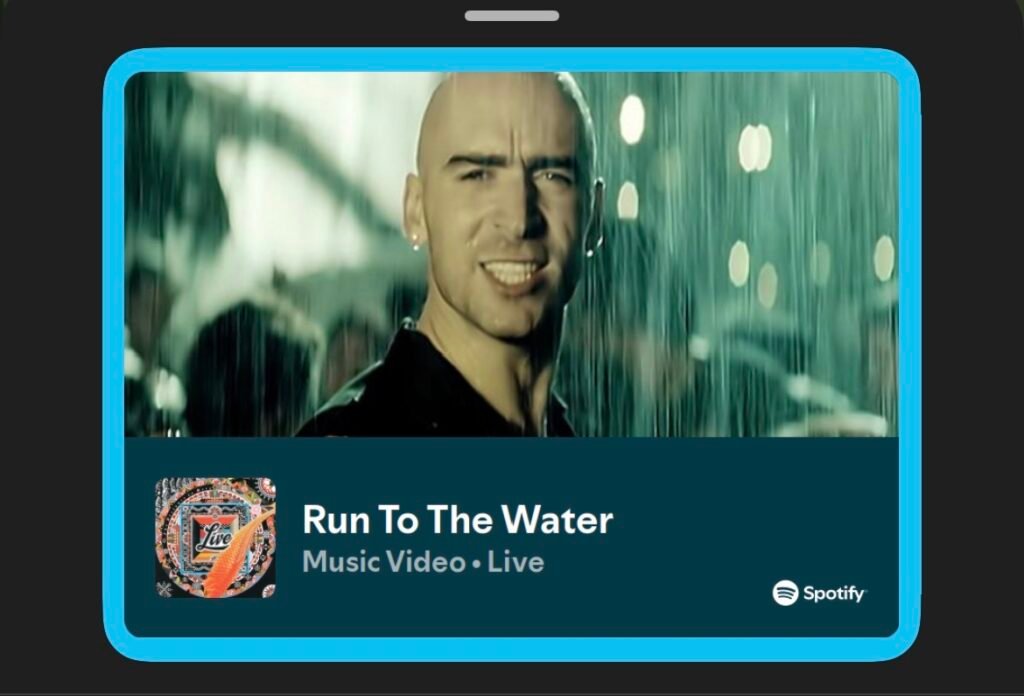
    That’s exactly what happened when the Artemis II crew used “Run to the Water” by Live as a wake-up song during their mission.

    Within days, a YouTube video from 2009 with 19 million views turned into a real-time gathering point for thousands of viewers—many hearing the song for the first time.


    The Data: A Sudden Surge in Engagement

    • Total comments (since 2009): 1,829
    • Historical pace: ~0.31 comments per day
    • Last 3 days: ~70 comments
    • New pace: ~23 comments per day

    Bottom line:

    👉 ~70x increase in daily comment activity

    This isn’t organic growth—it’s a triggered spike tied to a global event.

    Nearly every recent comment references Artemis II, confirming that the surge is driven by discovery, not nostalgia alone.
    Screenshot

    The Comments Tell the Story

    A sample of recent activity shows the pattern clearly:

    • “Here because of Artemis II mission!”
    • “Good morning Artemis II 🚀”
    • “This was the wake-up song on their last day in space”
    • “Millions of people will discover it now”

    This is what catalog owners dream of:
    a cultural moment that redirects attention at scale.


    A Reminder: This Was Always a Global Record

    Originally released in 2000 on Live’s platinum fourth album The Distance to Here, “Run to the Water” had solid but somewhat under-the-radar chart performance.

    The song was not released as a single in the United States, yet still reached:

    • No. 14 – Billboard Modern Rock Tracks
    • No. 17 – Mainstream Rock Tracks

    Internationally, it performed even better:

    • No. 10 – Canada
    • No. 15 – Finland
    • No. 25 – Netherlands
    • No. 34 – Australia
    • No. 44 – New Zealand

    Notably, it reached:

    • No. 1 in Iceland for three consecutive weeks, marking the band’s second straight chart-topper there

    👉 Translation:
    This wasn’t a forgotten song—it was a strong catalog asset waiting for a moment.


    Why This Happens (and Why It Matters)

    Catalog value isn’t just about streams—it’s about moments of rediscovery.

    When a song gets:

    • Placed in a cultural event
    • Associated with a mission or narrative
    • Introduced to a new generation

    …it can behave like a new release again.

    NASA unintentionally created:

    • A global listening event
    • A shared emotional context (space, return, humanity)
    • A discovery funnel into a 25-year-old catalog

    The Bigger Insight for Catalog Owners

    This is the playbook:

    1. Moments > Marketing
      You don’t need a campaign—you need a trigger.
    2. Context Creates Meaning
      A space mission reframes a song instantly.
    3. Dormant Doesn’t Mean Dead
      Catalogs are latent assets waiting for activation.
    4. Attention Can Be Re-Routed
      One decision (a wake-up song) → thousands of interactions

    Final Thought

    Most songs fade into passive streaming ecosystems.

    But every once in a while, something external—
    a film, a meme, a viral clip, or in this case, a NASA mission—
    pulls a track back into the center of attention.

    “Run to the Water” didn’t just get played.

    It got reintroduced to the world.

  • “Run to the Water” Quietly Outperforms Live’s Spotify Catalog After Artemis II NASA Moment

    Sometimes the story isn’t in the headline numbers. It’s in the small movements that don’t look like much—until you compare them.

    That’s what’s happening right now with “Run to the Water” by Live.

    Live currently sits at around 3.7 million monthly listeners on Spotify. That’s a stable, active catalog. Not surging, not declining—just sitting in that middle ground where most legacy bands live.

    Which is exactly why this matters.

    See our follow up story on “Run to the Water”


    A Small Moment… With Real Movement

    Recently, NASA used “Run to the Water” as part of the wake-up sequence for Artemis II.

    On its own, that’s just an interesting cultural note.

    But when you look at what happened next, the data tells a more interesting story.

    “Run to the Water” didn’t just rise—it outperformed comparable songs in Live’s Spotify Top 10 by roughly 3–4x on a percentage basis over the same period.

    Ed Kowalcyzyk Instagram

    Not the biggest hit. Not the most played.

    But the fastest moving.


    From #9 to #7 — And Why That’s Not Nothing

    The song, written by Ed Kowalczyk and Patrick Dahlheimer, also moved from #9 to #7 in Live’s top tracks.

    That kind of shift doesn’t usually happen randomly in a mature catalog. These rankings tend to be sticky.

    So when something moves, even a couple spots, it’s worth paying attention.

    Because what it suggests is simple:

    Listeners are choosing this song more often relative to the rest of the catalog.

    Not just hearing it—selecting it.


    What We’re Watching

    Right now, this is a signal—not a breakout.

    But it’s the kind of signal that can turn into something if it continues.

    We’ll be watching whether:

    • “Run to the Water” continues to outperform other Top 10 tracks
    • it climbs further up the rankings
    • and whether Live’s 3.7 million monthly listeners begins to tick upward

    If that listener number moves, even modestly, it suggests this isn’t just internal rotation—it’s new attention entering the system.


    The Bigger Idea

    Catalog growth rarely shows up all at once.

    It starts like this:
    a moment, a placement, a small shift in behavior.

    Then you get relative outperformance.

    Then, sometimes, it compounds.

    Most of the time it fades.

    But every now and then, it doesn’t.


    Final Thought

    “Run to the Water” isn’t a hit again. Not yet.

    But it’s doing something more important:

    It’s outperforming its peers.

    And in catalog analysis, that’s usually where the story starts.

    Live currently is in the Top 15 artists played on SiriusXM Lithium from Feb 5-April 5 2026.