Tag: AI in music

  • 5 Takeaways From Warner Music’s May 2026 Earnings Call

    1. AI Is Already Changing the Music Business

    Warner openly said AI will become a “material contributor” to revenue and profits starting in fiscal 2027. This is no longer theoretical. The company is already using AI for catalog marketing, lyric videos, visualizers, forecasting, reporting, and automation.

    2. Catalog Music Is the Economic Engine

    Warner said catalog music now represents roughly 65% of recorded music streaming revenue. Older music is becoming more valuable in the streaming era because catalogs can generate recurring revenue for decades.

    3. The Labels Want to Monetize AI, Not Just Fight It

    Rather than simply resisting AI platforms, Warner is pursuing licensing deals and partnerships. Its relationship with Suno shows the company believes AI music and interactive fan experiences could become major future revenue streams.

    4. Modern Record Labels Are Starting to Look Like Tech Companies

    The earnings call sounded more like a technology company presentation than a traditional music business update. Warner repeatedly discussed:

    • automation
    • standardized data systems
    • operating leverage
    • AI-driven forecasting
    • centralized intelligence

    The modern label is evolving into an AI-enabled intellectual property platform.

    5. Streaming Is Becoming a Higher-Margin Subscription Business

    Subscription streaming revenue grew 15%, helped by pricing increases across DSPs. The industry is moving beyond pure user growth and toward higher pricing, premium tiers, and stronger monetization of superfans and interactive experiences.
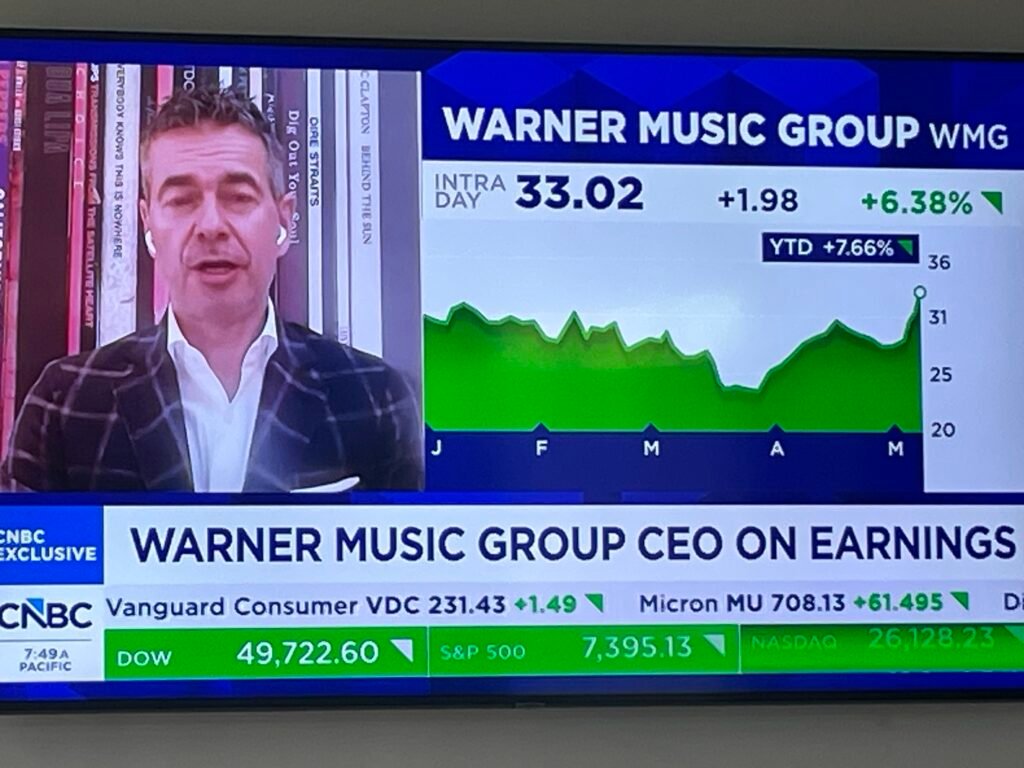
  • 5 Takeaways from Warner Music Group CEO Robert Kyncl’s CNBC Interview 🎵📈

    Warner Music Group delivered a strong quarter, but the bigger story from CEO Robert Kyncl’s CNBC interview may be where the music industry is headed next: AI, interactivity, pricing power, and platform economics.

    Robert Kyncl CNBC Interview

    Here are 5 major takeaways:

    1️⃣ Warner Music is operating more like a tech company
    Kyncl repeatedly emphasized automation, efficiency, organizational streamlining, and disciplined capital allocation.

    The message to investors was clear:
    Warner believes it can improve margins while simultaneously investing aggressively in artists, A&R, and distribution.

    That’s a very different narrative from the traditional “record labels are bloated” perception. The company is positioning itself as a scalable, technology-enabled media business.

    2️⃣ Pricing power is becoming a major growth driver
    Streaming growth is no longer just about adding subscribers.

    Warner discussed:
    • subscription price increases
    • per-subscriber minimums
    • stronger economics with streaming partners
    • higher monetization per user

    Kyncl even compared music streaming economics to cable TV carriage fees.

    Translation:
    The labels believe music is becoming valuable enough to command higher recurring revenue from platforms like Spotify and others.

    3️⃣ Warner is leaning INTO AI — not running from it

    One of the most interesting parts of the interview was Warner’s approach to AI.

    Instead of framing AI solely as a threat, Kyncl framed it as:
    “a new revenue opportunity.”

    The company’s partnership with Suno signals that Warner wants to help shape the licensing and monetization framework for AI-generated music rather than simply resist it.

    That could become extremely important over the next 3–5 years.

    4️⃣ “Interactive music” could become the next big business model


    Kyncl repeatedly used the word: “interactivity.”

    That matters.

    The company appears to believe the future of music may involve:
    • AI remixing
    • personalized music experiences
    • interactive fan engagement
    • customizable tracks
    • premium AI-powered streaming tiers

    The comparison to gaming was notable because gaming historically generates far higher revenue per user than passive media.

    Warner seems to believe AI could transform music from something people simply consume into something they actively participate in.

    5️⃣ Major music catalogs may become EVEN more valuable in the AI era


    As AI-generated music explodes, the value of trusted brands, superstar artists, iconic catalogs, and licensed intellectual property may increase.

    Why?

    Because abundance creates noise.

    When anyone can generate music instantly, discovery, trust, identity, and recognizable catalogs become even more important.

    That may strengthen the position of major labels that control massive libraries of culturally relevant music.

    Big picture:
    This interview sounded less like a traditional entertainment executive and more like a technology platform CEO discussing monetization, interactivity, scalability, and recurring revenue.

    The music industry is changing quickly — and Warner Music clearly wants to be one of the companies shaping the next phase of it.