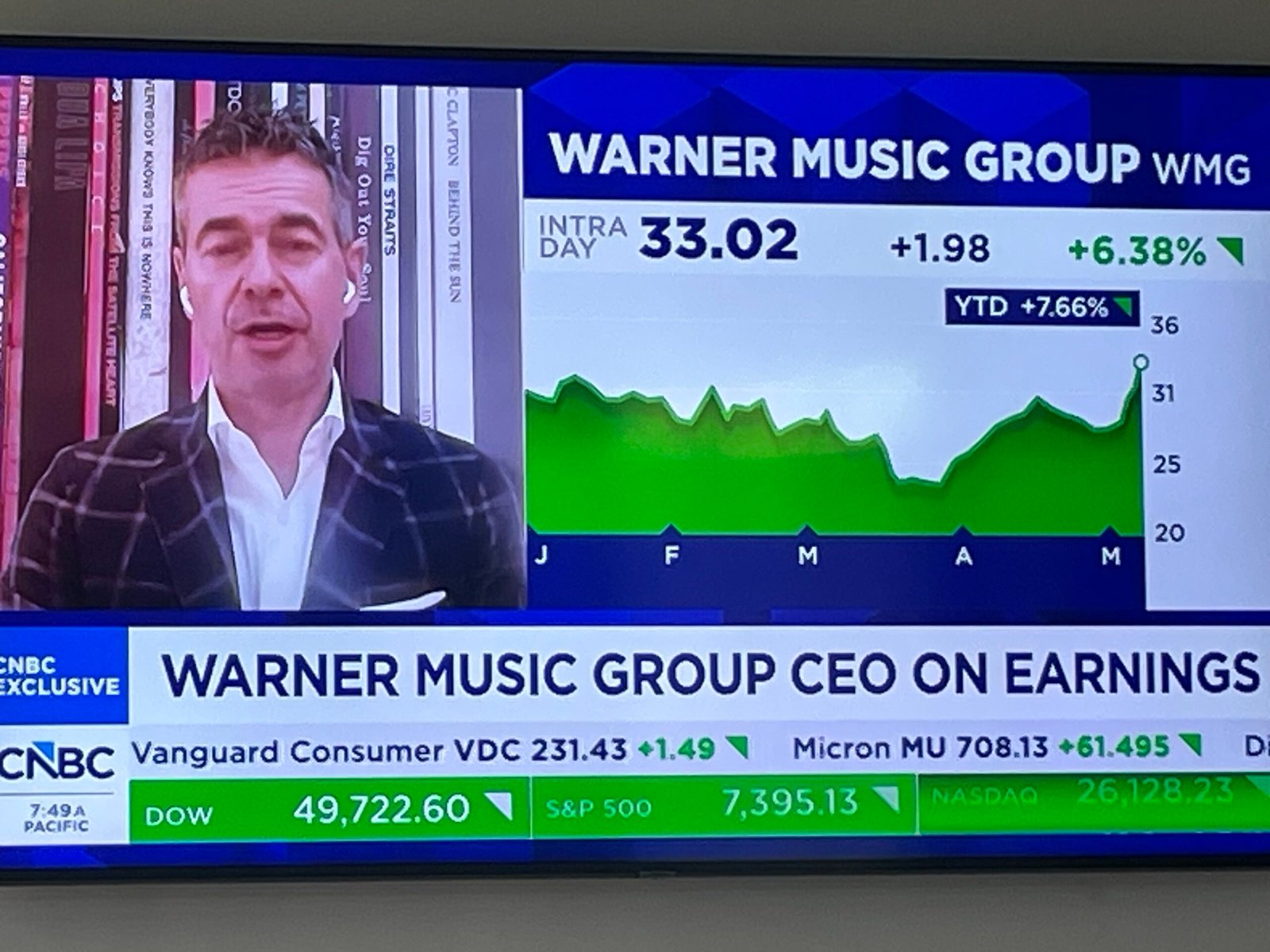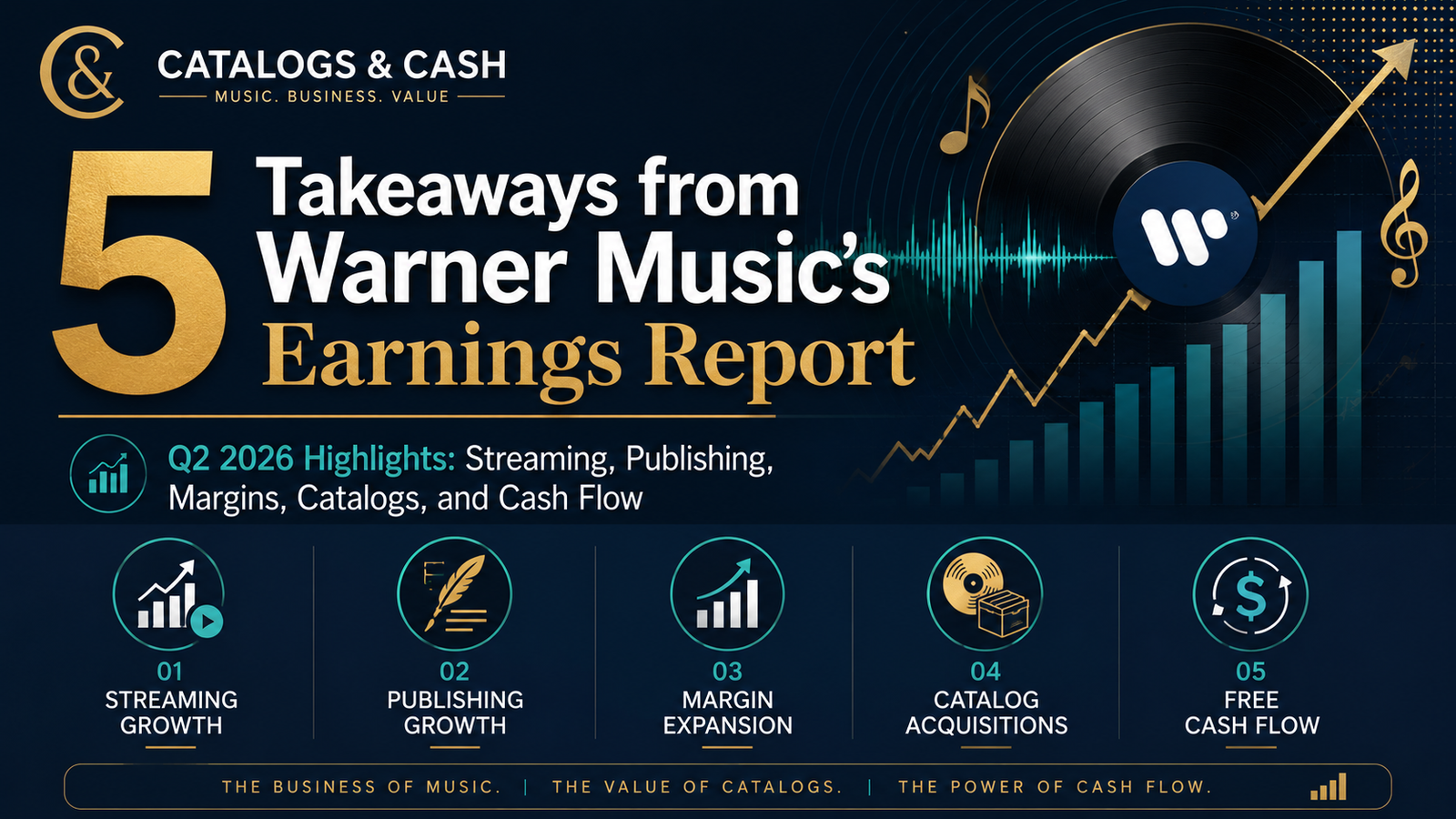
Warner Music Group’s fiscal second-quarter earnings report was a strong one: revenue grew, streaming accelerated, margins expanded, publishing remained healthy, and the company continued putting serious money behind catalog acquisitions.
Here are the five big takeaways.
1. Warner Music is growing faster than a mature music company “should”
Warner reported $1.732 billion in quarterly revenue, up 17% from the prior-year quarter. On a constant-currency basis, revenue increased 12%. That is strong growth for a major music company already operating at global scale.
The growth was broad-based, too. Recorded Music revenue increased 17%, while Music Publishing revenue increased 14%. That matters because Warner is not relying on only one part of the music business. Recorded music, publishing, streaming, physical, artist services, and sync all contribute to the larger machine.
Catalogs & Cash takeaway: Warner is not just a label. It is a global rights-management platform.
2. Streaming is still the engine of the business
Streaming remains the most important growth driver. Warner’s total streaming revenue increased 17.1%, while total digital revenue increased 16.7%. Recorded Music streaming revenue grew 16.5%, and Music Publishing streaming revenue grew 20%.
That publishing number is especially important. It shows that streaming growth is not only a master-recording story. Every stream also creates value for songwriters, publishers, and catalog owners.
Warner also said Recorded Music subscription revenue increased 18%, while ad-supported streaming revenue increased 11.8%. Subscription revenue remains the cleaner, more durable piece of the streaming model.
Catalogs & Cash takeaway: Streaming is still compounding, and publishing may be the quieter winner.
3. Warner and Bain are still betting big on catalogs
One of the most important lines in the release: Warner’s joint venture with Bain acquired $650 million in Recorded Music and Music Publishing catalogs.
That is a major signal. Even after years of debate about whether catalog prices got too high, institutional money is still flowing into music rights.
The logic is simple: catalogs can produce long-term cash flow from streaming, publishing royalties, licensing, sync, physical reissues, and global consumption. Warner is not just signing new artists. It is buying durable rights.
Catalogs & Cash takeaway: The catalog market is not dead. The buyers are just becoming more selective and strategic.
4. Physical music is still alive — and catalog helps explain why
Warner’s Recorded Music physical revenue increased 22.3% year over year. The company said the increase was driven by strong releases, catalog, and carryover success.
That is a sneaky important point. Physical music is no longer the center of the industry, but it is still a meaningful premium layer. Vinyl, deluxe editions, anniversary releases, box sets, and collector products can turn music fandom into higher-value purchases.
Streaming gives the catalog reach. Physical gives the catalog depth.
Catalogs & Cash takeaway: Vinyl and physical media are not replacing streaming. They are monetizing the most engaged fans.
5. Warner is getting more profitable, not just bigger
Warner’s operating income increased 57% to $264 million, while Adjusted OIBDA increased 31% to $397 million. Adjusted OIBDA margin rose from 20.4% to 22.9%.
That matters because the market does not only care about revenue growth. It cares about whether music companies can turn revenue into profit and cash flow.
Warner also reported that free cash flow increased to $99 million, compared with $33 million in the prior-year quarter.
Catalogs & Cash takeaway: The modern music business is increasingly about operating leverage: better systems, better rights management, better cost discipline, and better monetization of existing assets.
Bottom line
Warner’s Q2 report tells a clear story: streaming is still growing, publishing is strong, physical music still has a role, margins are improving, and catalog acquisitions remain central to the strategy.
For Catalogs & Cash, the big idea is this:
Music rights are not just cultural assets. They are financial assets — and Warner Music is managing them that way.